Grade 3 math puzzles — free practice & printable teacher quizzes
Free grade 3 math puzzles that teach abstract thinking — competition and Olympiad style,
with instant hints, full solutions and a named thinking strategy for every task.
Try each one first — the hint and the full solution open when you are ready.
Or solve them in the app with read-aloud and instant feedback.
Problem 1 · Build greedily, digit by digit · 3 points
What is the smallest 3-digit number in which all three digits are different?
123
120
102
100
101
Show a hint
Make the hundreds digit as small as allowed, then the tens digit, then the ones.
Show the answer and solution
Answer: C — 102
Hundreds digit: smallest allowed is 1 (0 would not give a 3-digit number). Tens: smallest unused is 0. Ones: smallest still unused is 2. Answer: 102. (100 repeats 0, 101 repeats 1.) Choosing the best option position-by-position is called a greedy strategy — and knowing when it works is real mathematical judgment.
Problem 2 · Bridge through a round number · 3 points
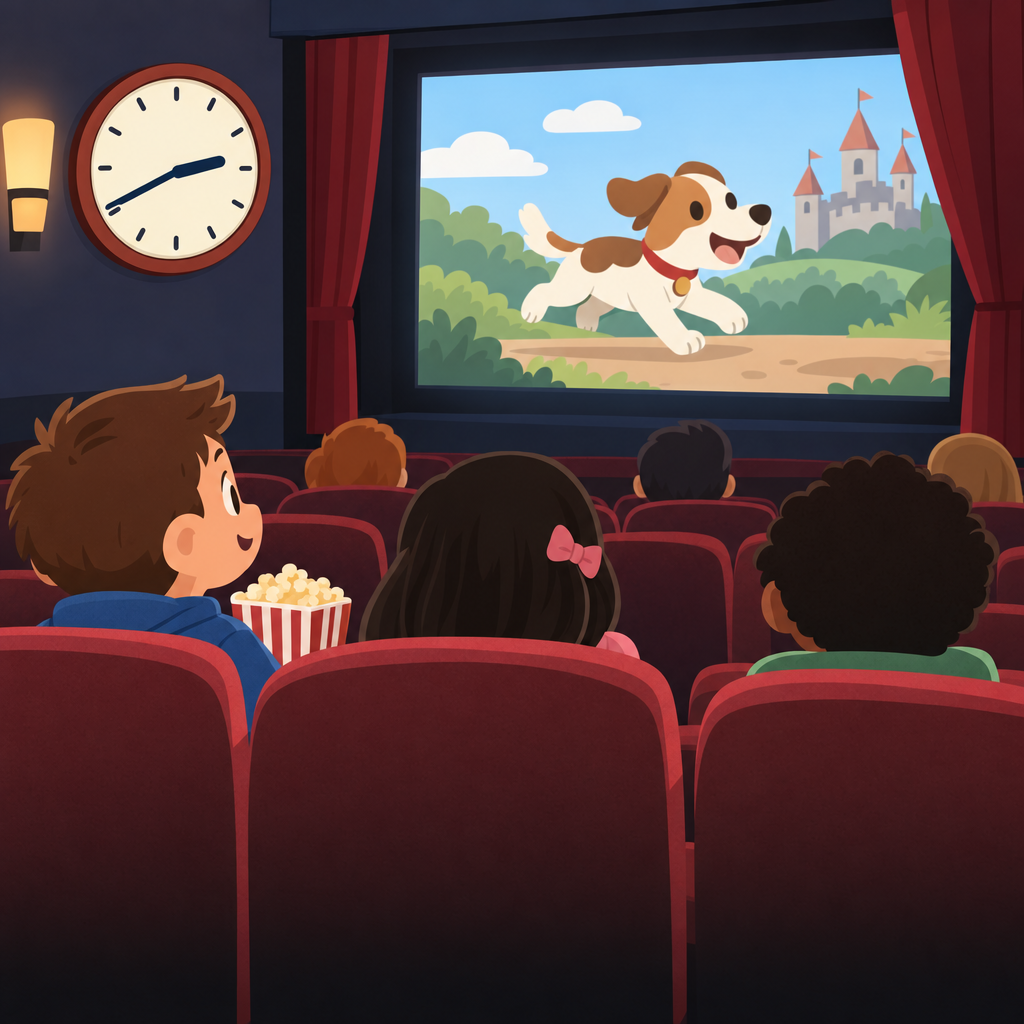
A movie starts at 2:40 and lasts 50 minutes. At what time does it end?
3:20
3:50
3:40
4:30
3:30
Show a hint
Use the next full hour as a stopping point instead of adding all 50 minutes at once.
The next full hour after 2:40 is 3:00. Find how many minutes it takes to get there, then subtract that from 50 minutes.
Show the answer and solution
Answer: E — 3:30
From 2:40 to 3:00 is 20 minutes, leaving 50 − 20 = 30 minutes. Another 30 minutes brings the time to 3:30. The wrong choice 3:50 comes from adding all 50 minutes after reaching 3:00, which counts the first 20 minutes twice.
Problem 3 · Compare two orders using a shared starting point · 3 points
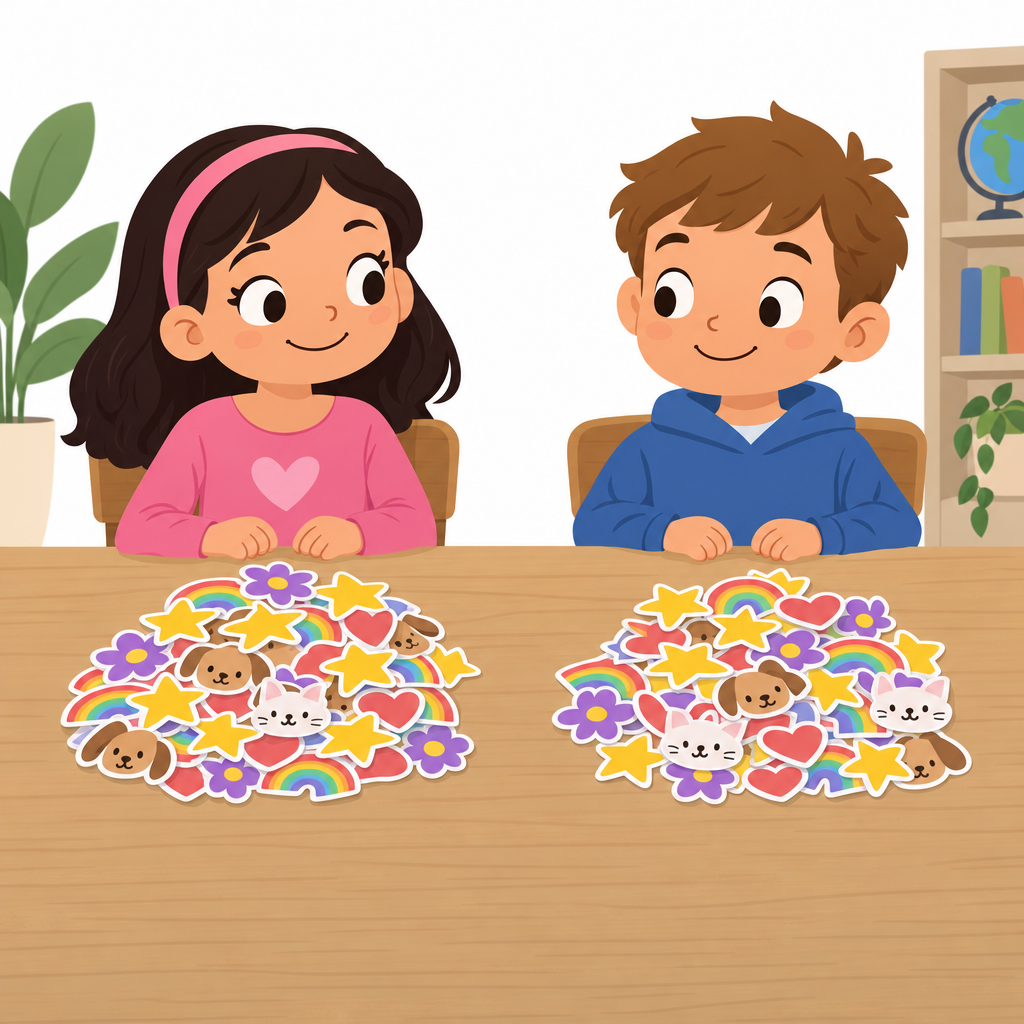
Nina and Leo start with the same even number of stickers, at least 12: Nina gives away 6 and then half of what remains, while Leo gives away half and then 6. How many more stickers does Nina have than Leo?
3
9
6
12
0
Show a hint
The starting number is a mystery, but the difference between their final piles is not. Think about when each child gives away the 6 stickers.
Compare what each would keep if both halved their stickers first. How does Nina’s earlier giveaway change her kept half?
Show the answer and solution
Answer: A — 3
If both halved their stickers first, they would keep the same amount. Giving away 6 before halving reduces Nina’s kept half by 3, while giving away 6 after halving reduces Leo’s by 6. So Nina has 6 − 3 = 3 more stickers. The tempting answer 0 treats the two orders as if they give the same result.
Problem 4 · Label with a letter (early algebra) · 4 points
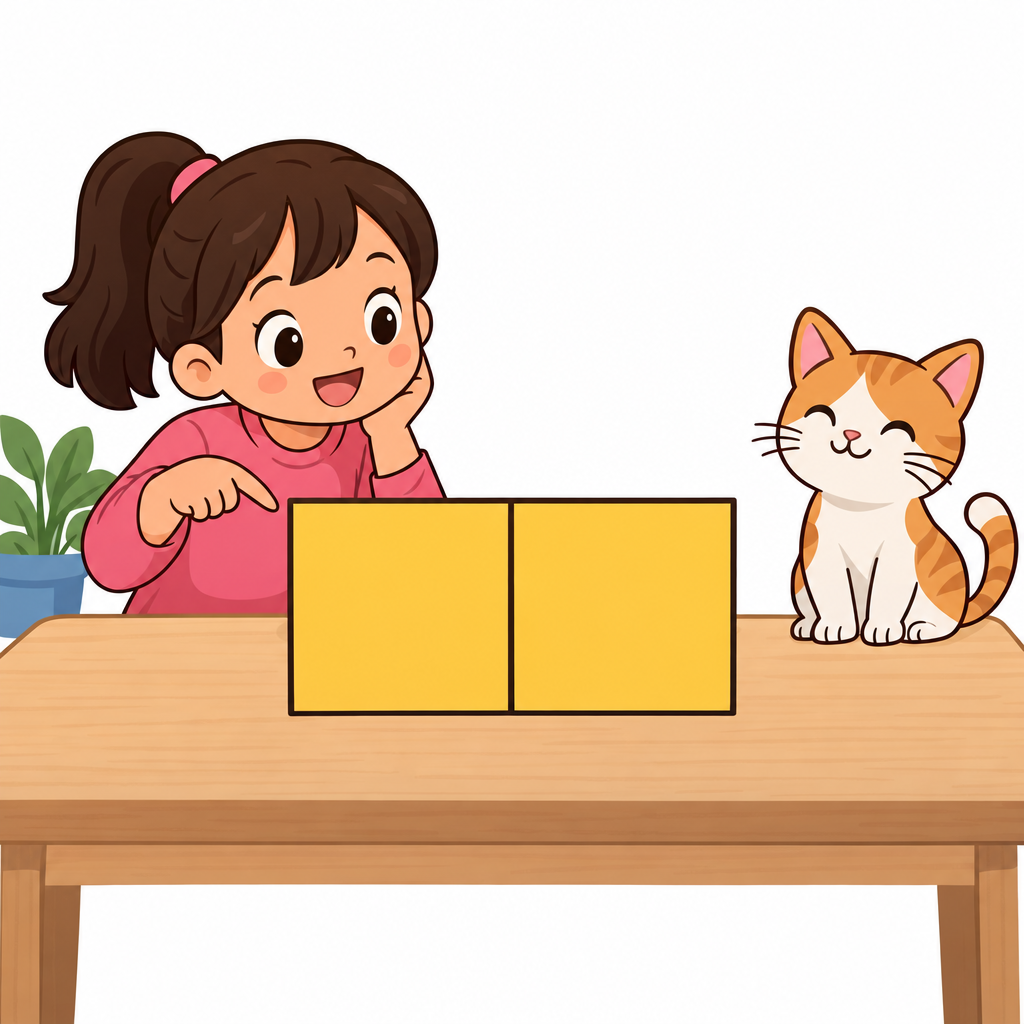
Two identical squares are placed side by side to make a rectangle. The perimeter of the rectangle is 30. What is the side length of each square?
6
3
4
10
5
Show a hint
Call the square's side s. How long and how tall is the rectangle in terms of s?
Walk around the rectangle and add up all the sides.
Show the answer and solution
Answer: E — 5
Let the square's side be s. The rectangle is 2s long and s tall, so its perimeter is 2s + s + 2s + s = 6s. From 6s = 30 we get s = 5. Giving an unknown a name and computing with the name — before knowing its value — is the very heart of algebra.
I think of a number. I double it, then add 3, and I get 15. What was my number?
9
7
5
8
6
Show a hint
Undo the steps in reverse order: last step first.
Show the answer and solution
Answer: E — 6
Undo the "+3": 15 − 3 = 12. Undo the doubling: 12 ÷ 2 = 6. Working backwards — undoing each operation in reverse order — solves whole families of puzzles and is exactly how equations are solved.
How many two-digit numbers have digits that add up to 5?
4
3
7
6
5
Show a hint
Let the first digit go 1, 2, 3, … and find the second digit each time.
Show the answer and solution
Answer: E — 5
March through first digits in order: 14, 23, 32, 41, 50 — five numbers. (05 is not a two-digit number.) A fixed marching order turns "did I find them all?" from a worry into a certainty.
Problem 7 · Bounding an extreme by ordering · 5 points
Five friends share 50 marbles, each getting a different positive number. The biggest share is twice the smallest; what is the largest possible middle share when the five shares are put in order?
12
10
9
14
11
Show a hint
Put the shares in order. Making the middle share bigger can force changes at both ends.
Try a middle share of 11. How small could all five shares be while following every rule?
Show the answer and solution
Answer: B — 10
If the middle share were 11 or more, the two larger shares would be at least 12 and 13. Since the largest is twice the smallest, the smallest must be at least 7, making the largest at least 14. The five shares would total at least 7 + 8 + 11 + 12 + 14 = 52—too many. But 7, 8, 10, 11, and 14 total 50 and follow every rule, so 10 is possible and is the greatest. The tempting 11 overlooks how the rule about the largest and smallest shares pushes the total above 50.
Problem 8 · Eliminate using odd and even numbers · 5 points
Amy, Ben, Cy, and Dee each take a different card numbered 1 through 6, leaving two cards behind; Amy and Ben's cards add to 7, while Cy and Dee's add to 8. Both leftover cards are even, and Amy's card is bigger than Cy's; what number is on Amy's card?
6
1
5
4
3
Show a hint
If both leftover cards are even, what must have happened to the odd-numbered cards?
Only one even-numbered card was taken. What does that tell you about the two cards that add to 8?
Show the answer and solution
Answer: A — 6
All three odd cards—1, 3, and 5—were taken, along with just one even card. Cy and Dee's cards add to 8, so they must have the two odd cards 3 and 5; Amy and Ben then have 1 and 6 to make 7. Amy's card is bigger than Cy's, so Amy has 6. The tempting answer 4 can make both sums work, but it would leave 1 and 5 behind, and those cards are odd.
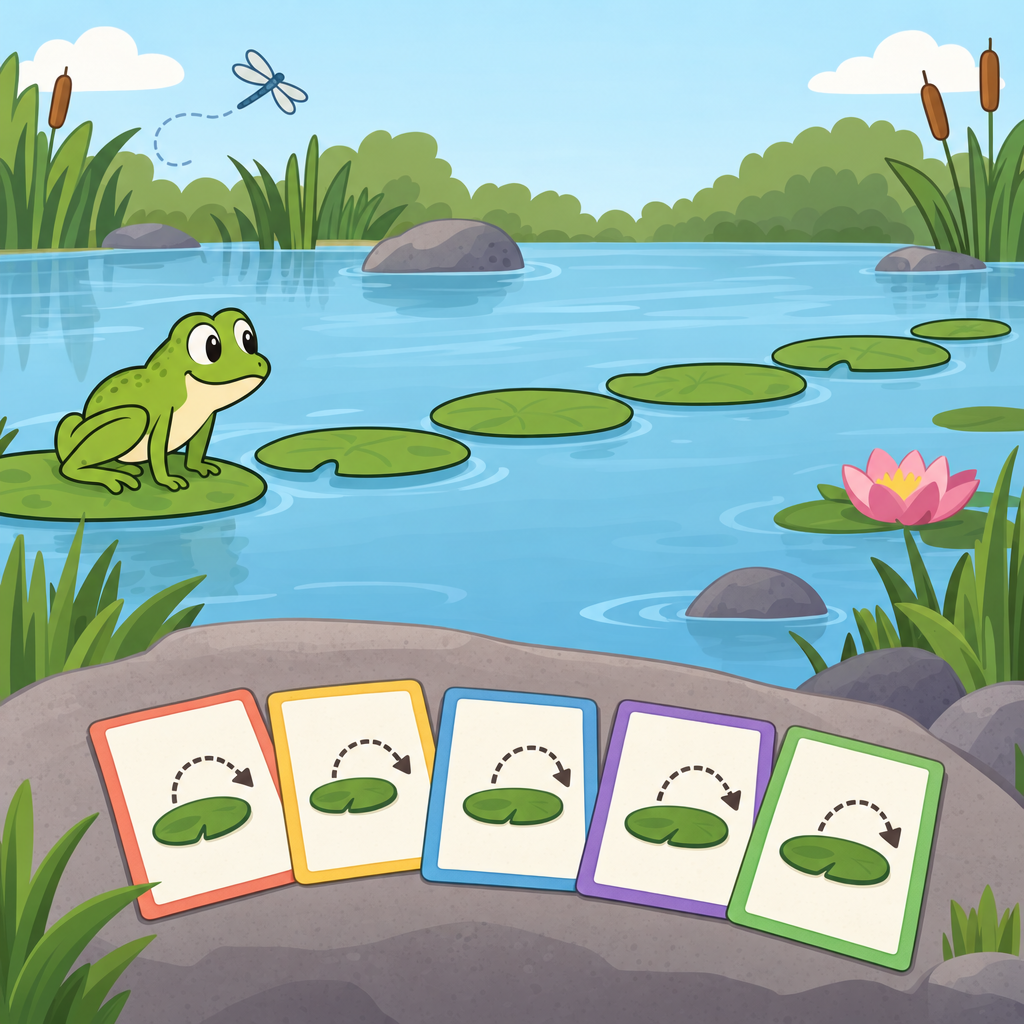
A frog has jump cards marked 1, 2, 3, 4, and 5; each card tells how far to jump, and it uses each card once. Starting on 6, it lands on 10, 11, 16, and 18—where will it land after its last jump?
22
24
20
19
21
Show a hint
The landings don't show the card numbers directly. Think about what happened between each pair of landings.
Find the lengths of the four jumps so far, then see which card is left.
Show the answer and solution
Answer: E — 21
The four jumps are 4, 1, 5, and 2, leaving the 3-step card. The frog lands on 18 + 3 = 21. The jumps 4, 1, 5, 2 might tempt you to choose 24 by jumping 6 next, but there is no 6-step card.
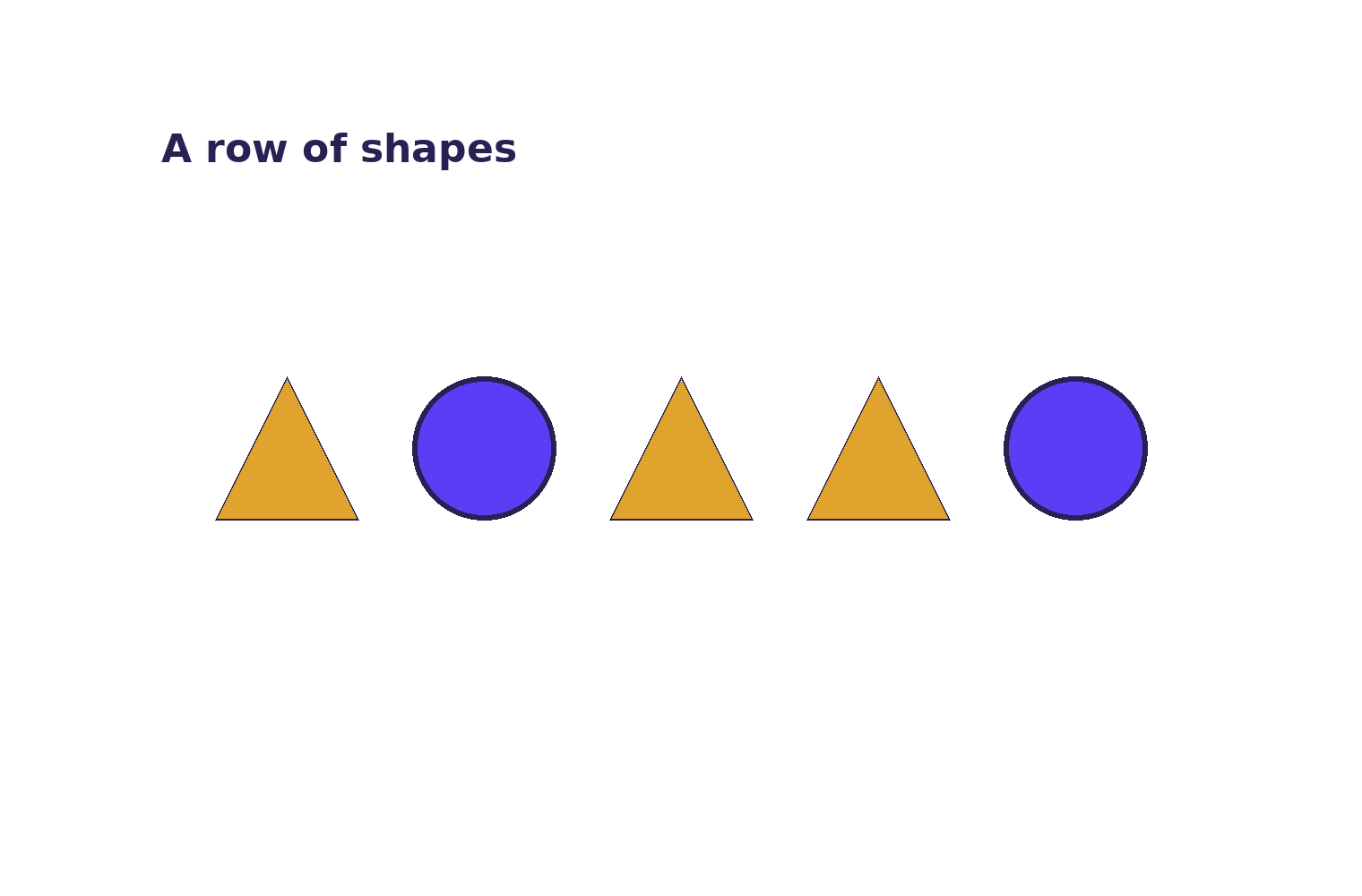
Maya picks three spots in the row. How many different groups of spots can she pick that include both kinds of shapes?
10
6
3
8
9
Show a hint
Think about the circles as you make groups, and be careful not to count the same group twice.
What happens if Maya picks one circle? What happens if she picks both?
Show the answer and solution
Answer: E — 9
With one circle, Maya can choose either circle and two of the three triangles, making 6 groups. With both circles, she can choose any one of the three triangles, making 3 more groups. That gives 9 groups. The answer 6 misses the groups that use both circles.
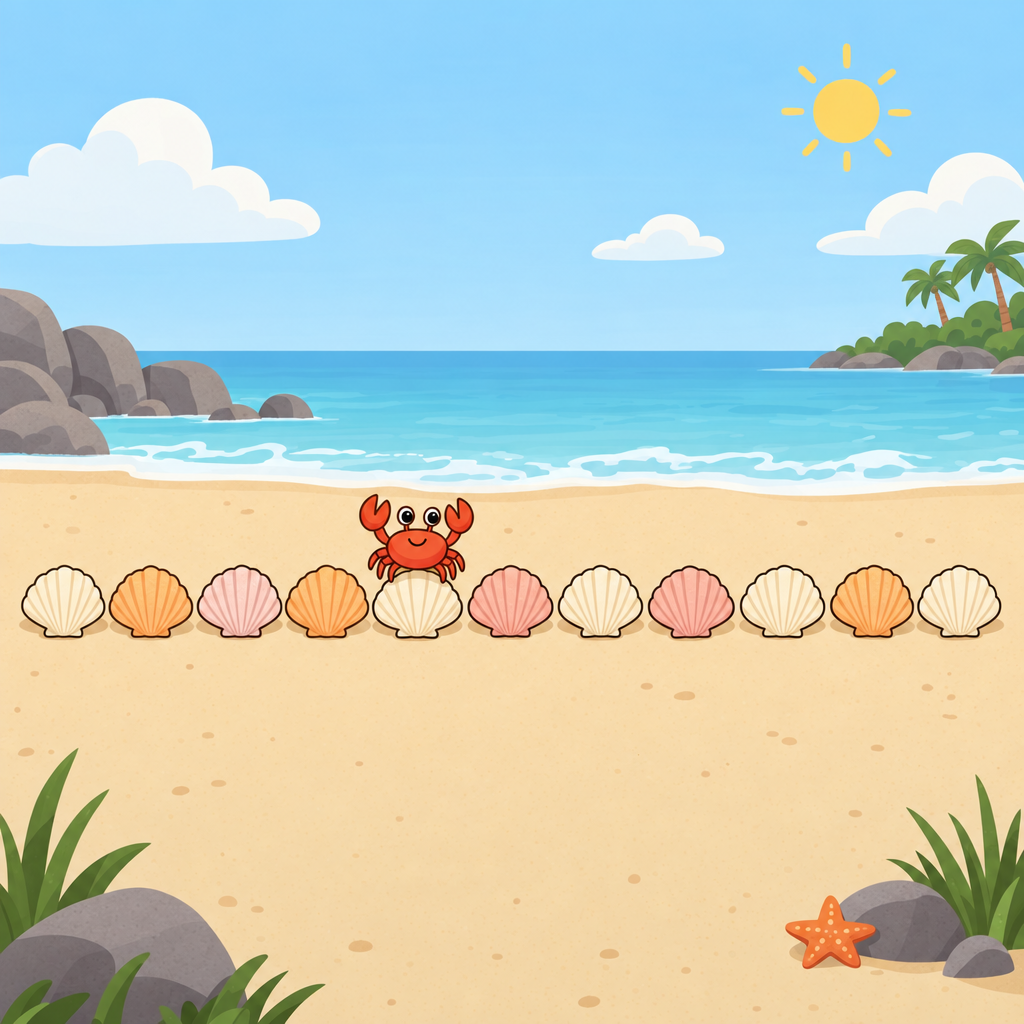
A toy crab starts on shell 5 in a row of shells numbered 1 to 11. It takes exactly four steps, each to a neighboring shell; which shell could it finish on?
7
6
8
11
4
Show a hint
Each step switches between an odd and an even number.
Show the answer and solution
Answer: A — 7
The crab can reach 7 by stepping 5 → 6 → 7 → 8 → 7. After four steps from odd-numbered shell 5, it must finish on an odd number, so 4, 6, and 8 are impossible. Shell 11 is odd, but it is six steps away—too far for the crab to reach in four steps.
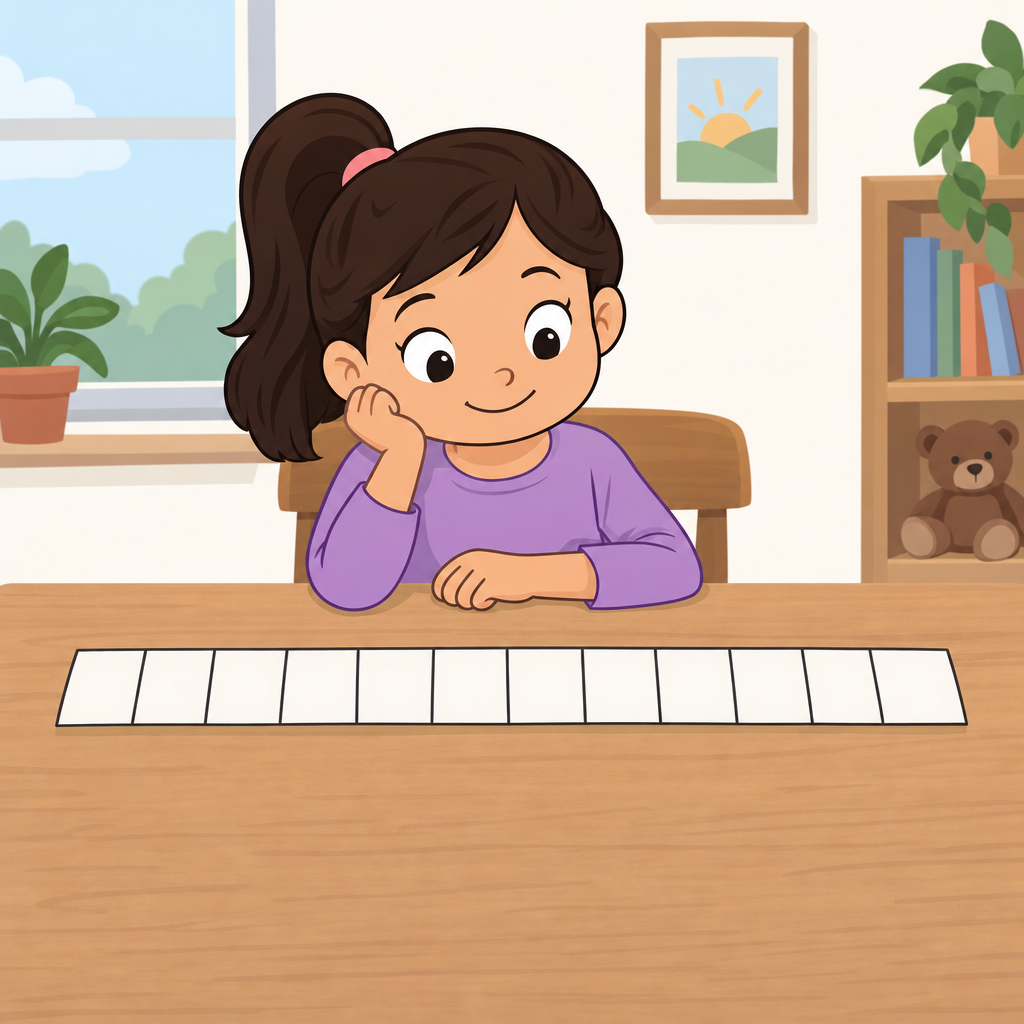
Mia has a strip of 12 squares numbered 1 to 12 from left to right. She folds the strip exactly in half, then folds the shorter strip exactly in half again; what is the sum of the four numbers in the final stack containing square 2?
28
13
25
26
24
Show a hint
After the first fold, square 2 is stacked with square 11.
Which first-fold stack joins that pair in the second fold?
Show the answer and solution
Answer: D — 26
The first fold stacks 2 with 11 and 5 with 8. These two stacks join in the second fold, so the final stack contains 2, 11, 5, and 8. Their sum is 26. The choice 13 counts only 2 and 11, forgetting the second fold.