Grade 2 math puzzles — free practice & printable teacher quizzes
Free grade 2 math puzzles that teach abstract thinking — competition and Olympiad style,
with instant hints, full solutions and a named thinking strategy for every task.
Try each one first — the hint and the full solution open when you are ready.
Or solve them in the app with read-aloud and instant feedback.
Problem 1 · Count both ends in two groups · 3 points
Mia stamps the pages numbered 17 through 42, but she skips pages 25 through 30 because they already have stamps. How many pages does she stamp?
20
26
18
21
19
Show a hint
Think about the pages before the skipped pages and the pages after them. How can you count each group without listing every page?
Count pages 17 through 24, then pages 31 through 42. In each group, remember the page where Mia starts.
Show the answer and solution
Answer: A — 20
Mia stamps pages 17 through 24, which is 8 pages, and pages 31 through 42, which is 12 pages. She stamps 8 + 12 = 20 pages. The answer 18 comes from subtracting the numbers at the ends of each group but forgetting to count the starting page in each group.
Problem 2 · Multiplication with equal groups · 3 points
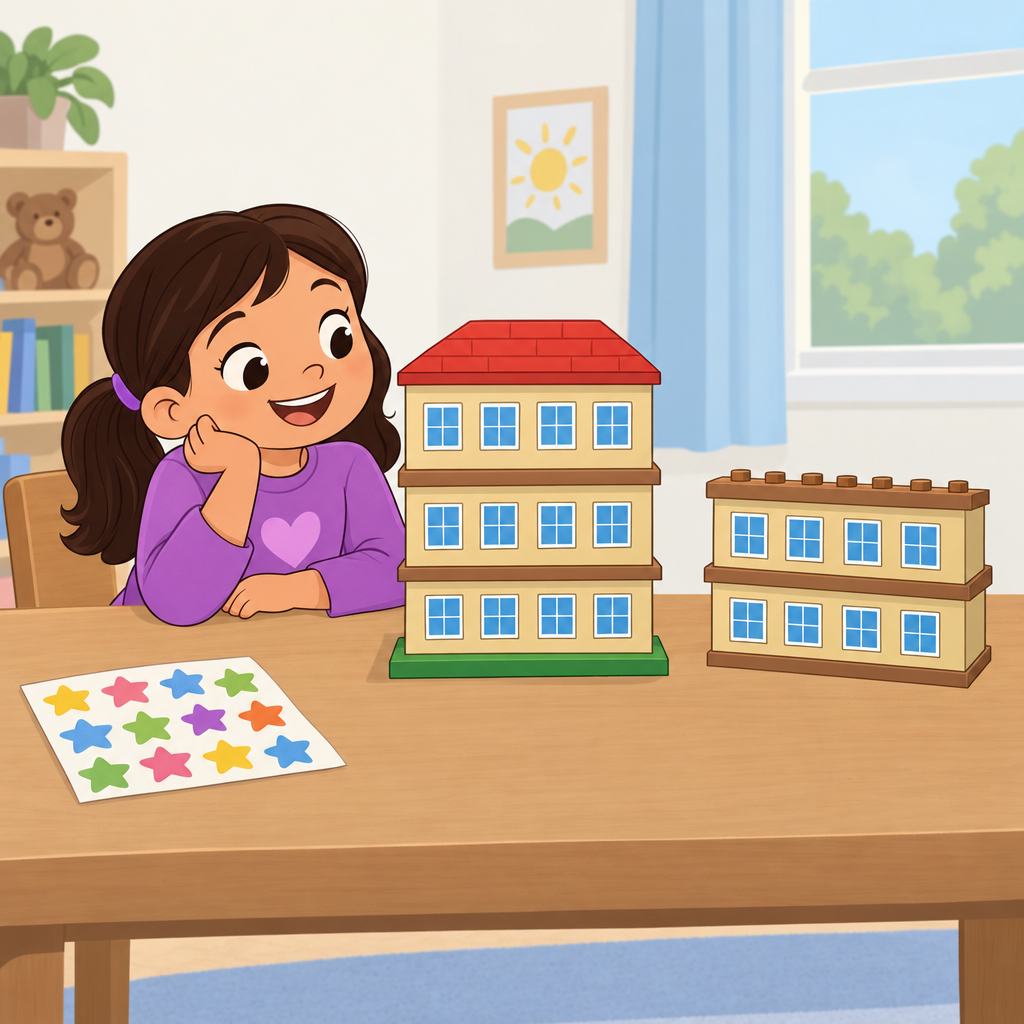
Mia’s toy building has 3 floors and 12 windows, with the same number on each floor. She adds 2 matching floors, then covers one window on each floor with a sticker; how many windows are left uncovered?
15
12
20
17
18
Show a hint
Picture what happens to the windows on one floor when its sticker goes on. Remember that the new floors get stickers too.
Find how many windows are on one floor, then how many remain uncovered on that floor. How many floors does the finished building have?
Show the answer and solution
Answer: A — 15
The original 3 floors have 12 windows, so each floor has 4. A sticker leaves 3 windows uncovered on each floor. There are now 5 floors, so 5 × 3 = 15 windows are uncovered. The tempting answer 17 counts stickers on only the 3 original floors, not the 2 new ones.
Problem 3 · Do the experiment in your head · 3 points
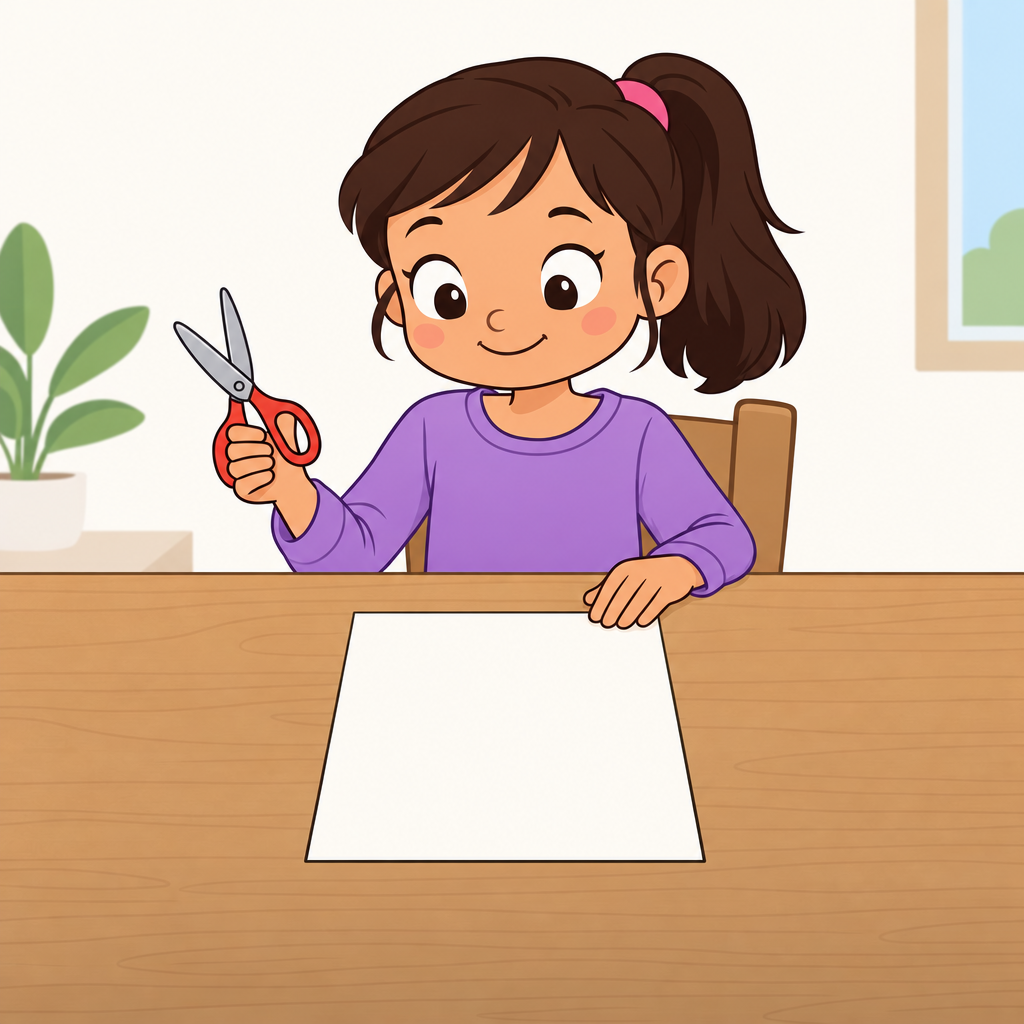
Zoe cuts a square sheet of paper into two pieces with ONE straight cut. Which of these can she NOT get?
two squares
two rectangles
two triangles
two trapezoids
a triangle and a pentagon
Show a hint
Imagine each cut: corner to corner, edge to edge straight across, edge to edge slanted…
Show the answer and solution
Answer: A — two squares
Corner-to-corner gives two triangles. A straight cut across the middle gives two rectangles. A cut from one edge to a neighboring edge gives a triangle and a pentagon. A slanted cut between opposite edges gives two trapezoids. But two squares is impossible: the two pieces would be squares joined along the whole cut line — and two squares glued edge-to-edge make a LONG rectangle, never the square you started with. Testing each option with a mental experiment is real mathematical thinking.
Problem 4 · Connect ages across a timeline · 4 points
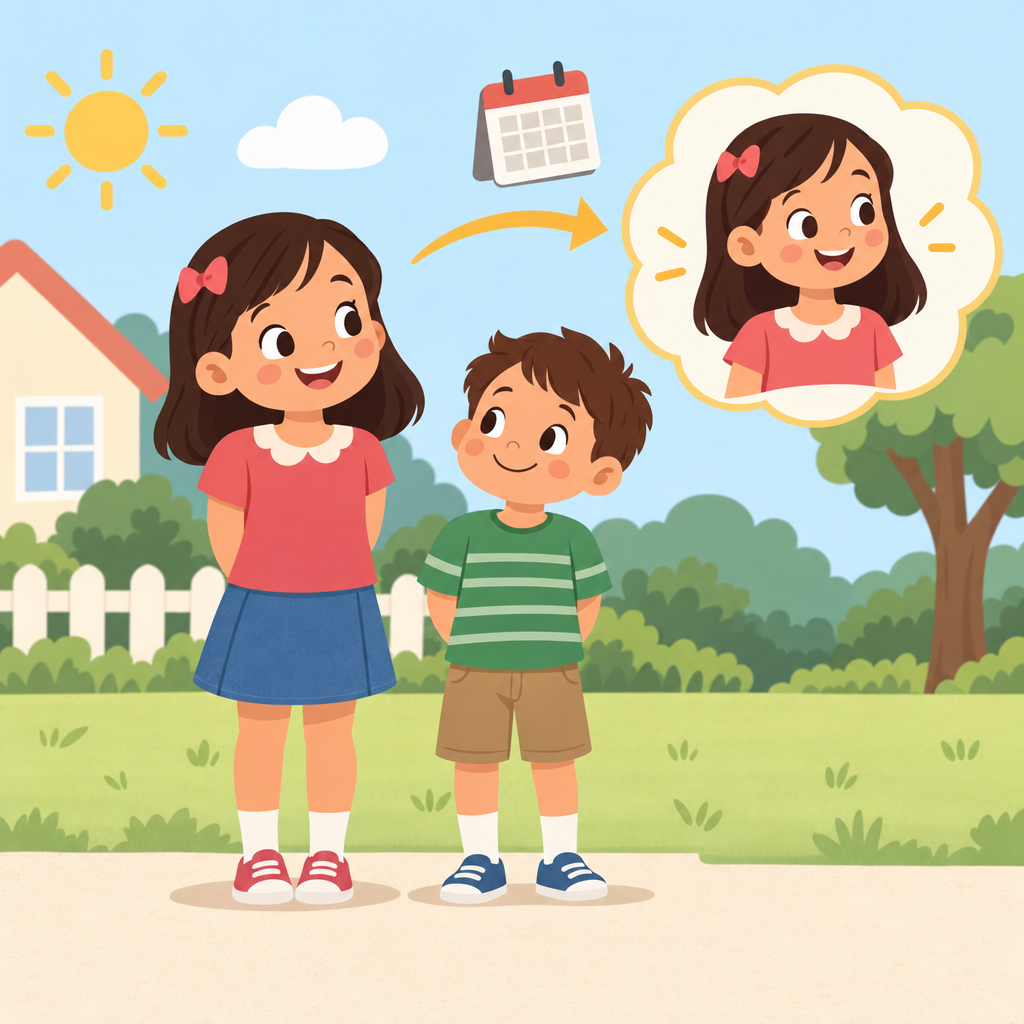
Lila is 4 years older than Sam. Back when Lila was Sam’s age today, Sam was 3. How old is Lila today?
3
8
7
11
15
Show a hint
Draw two columns, ‘back then’ and ‘today,’ with a space for each child’s age. Which age belongs in both columns?
Lila is 4 years older in both columns. Work out her age back then, then use it to fill in Sam’s age today.
Show the answer and solution
Answer: D — 11
Back then, Sam was 3, so Lila was 3 + 4 = 7. Lila was Sam’s age today, so Sam is 7 today. That makes Lila 7 + 4 = 11 today. The tempting answer 7 is Lila’s age back then, not her age today.
Problem 5 · Swap and cancel on balances · 4 points
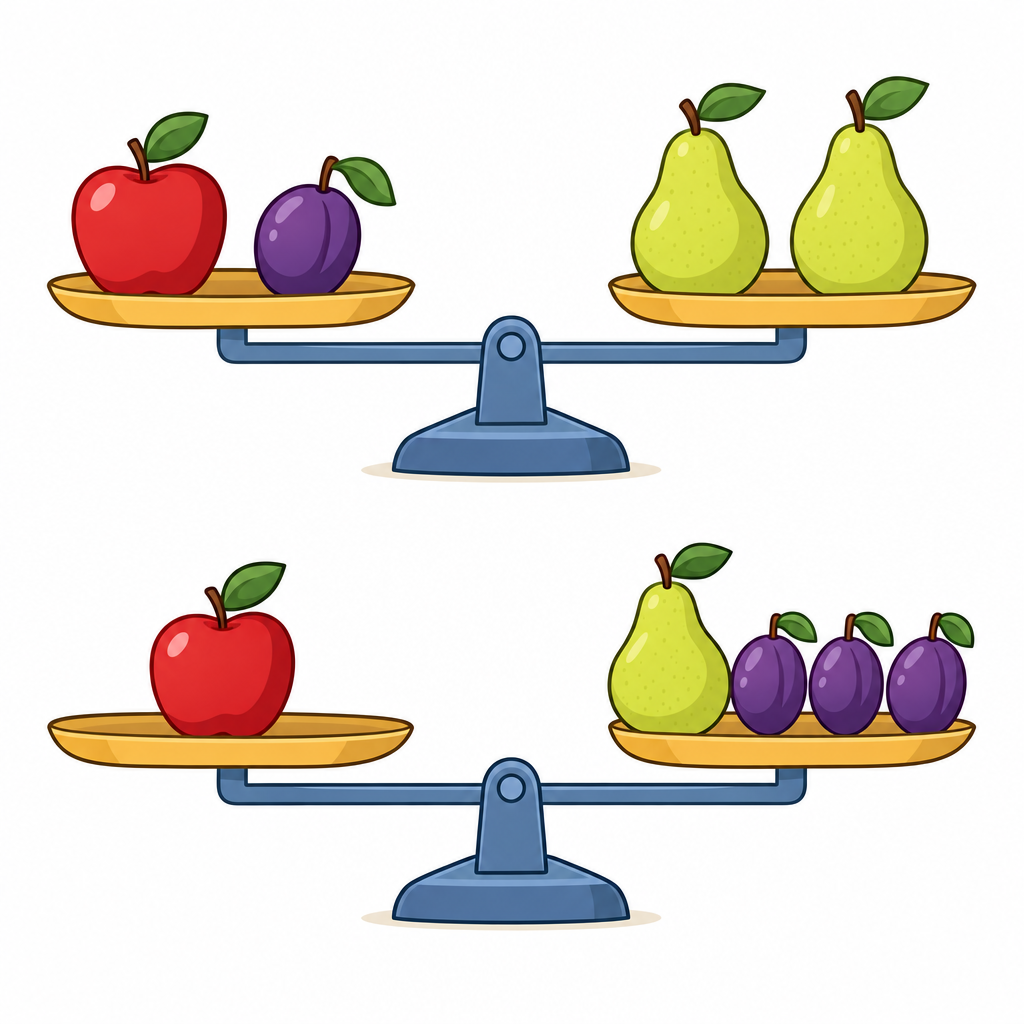
An apple and a plum balance two pears. On another scale, an apple balances a pear and three plums. How many plums balance one pear?
3
5
4
2
6
Show a hint
Both scales show an apple. Could you use one scale to replace the apple on the other?
After the swap, count the plums beside the pear. Then imagine removing a pear from each side.
Show the answer and solution
Answer: C — 4
Replace the apple on the first scale with a pear and three plums. Now one pear and four plums balance two pears. Remove one pear from each side, leaving four plums balancing one pear. The answer is 4. Choosing 3 misses the plum that was already beside the apple.
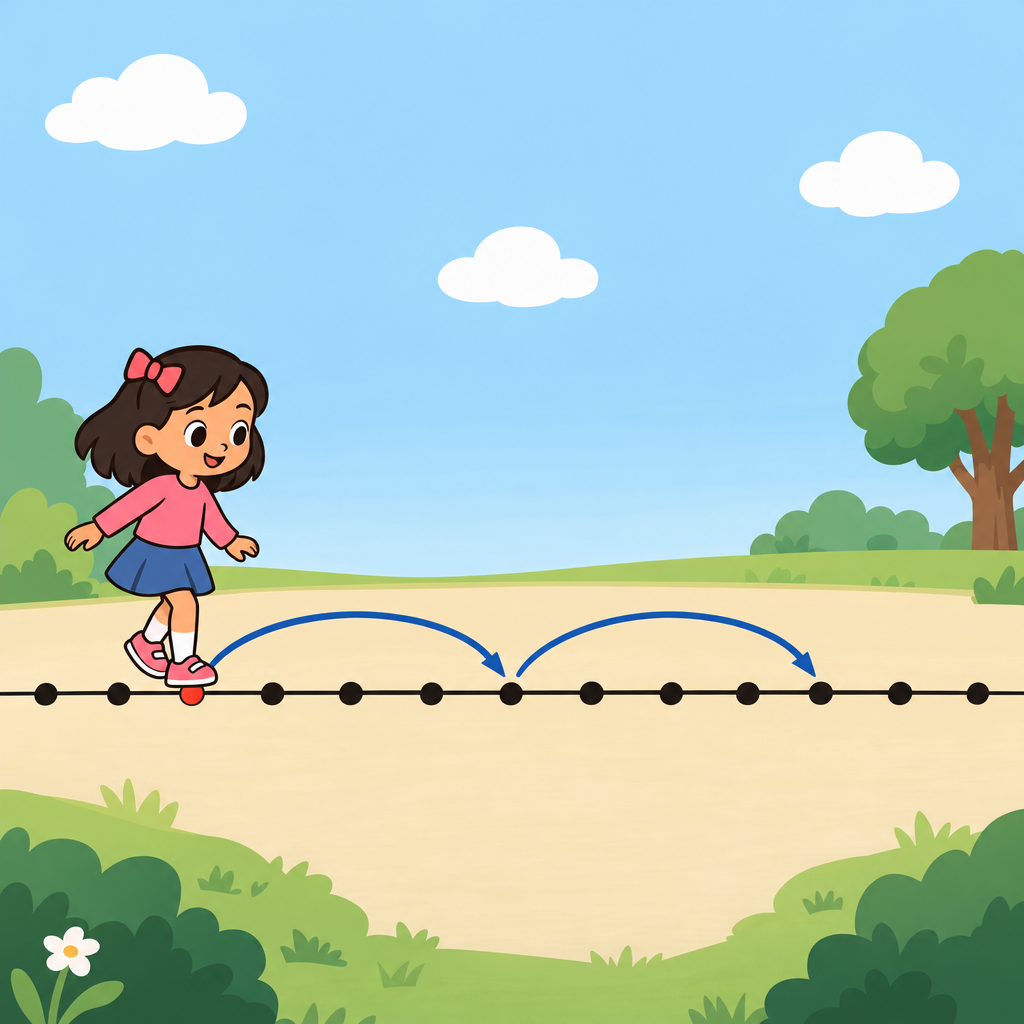
Nia starts at 2 and hops 4 spaces each time, while Bo starts at 4 and hops 6 spaces each time. Which number will they both land on?
30
28
18
22
16
Show a hint
Imagine marking Nia’s landing spots in one color and Bo’s in another. What would the answer’s mark look like?
Count by 4s from Nia’s start and by 6s from Bo’s start. Check which choice appears on both trails.
Show the answer and solution
Answer: D — 22
Nia lands on 6, 10, 14, 18, 22, 26, 30, … . Bo lands on 10, 16, 22, 28, … . Of the choices, only 22 is on both trails. The tempting choice 18 is on Nia’s trail, but Bo hops from 16 to 22.
In a line of children, Tom is 5th from the front and 4th from the back. How many children are in the line?
7
8
9
6
10
Show a hint
Draw the line. Careful: is Tom counted from the front AND from the back?
Show the answer and solution
Answer: B — 8
4 children stand before Tom and 3 after him, so 4 + 1 + 3 = 8. The tempting answer 5 + 4 = 9 counts Tom twice — once in each direction. Spotting where a count overlaps is a skill you will use in much harder problems.
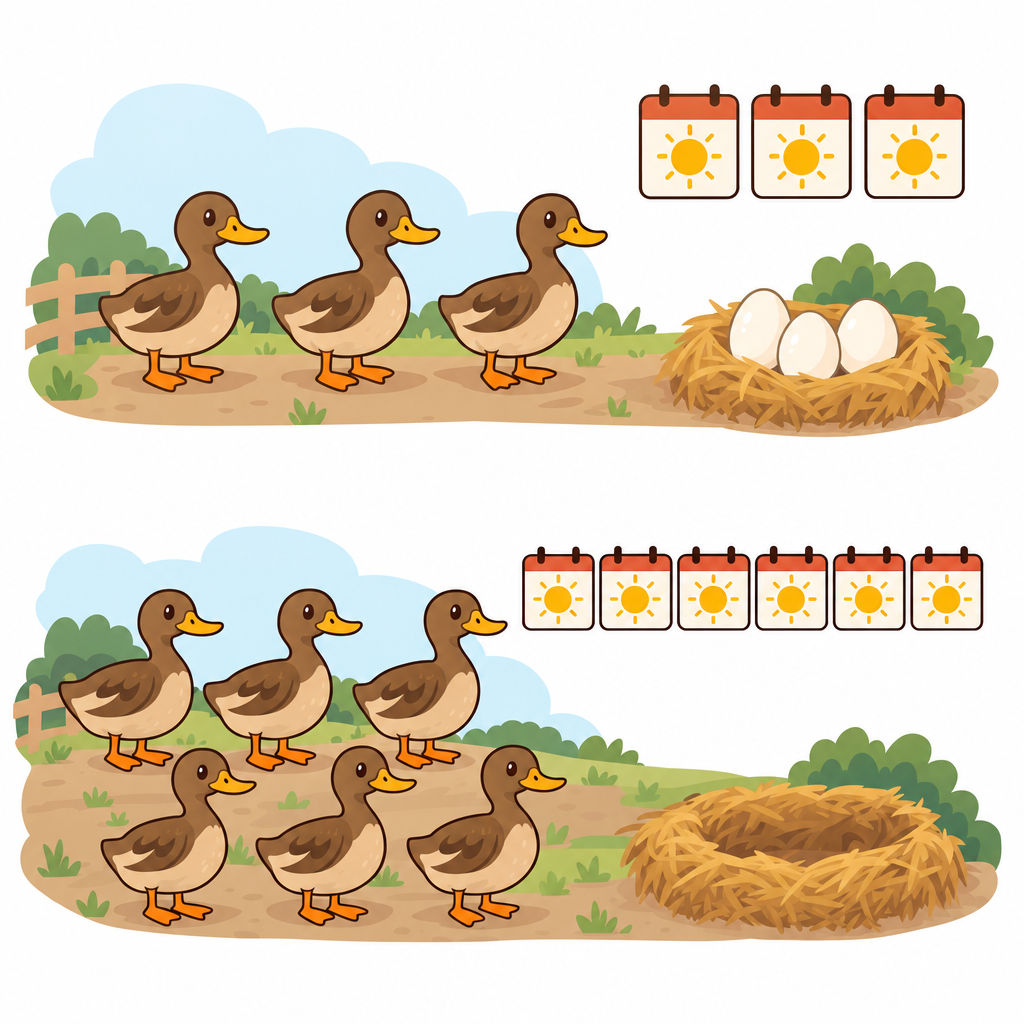
Three ducks lay 3 eggs in 3 days (laying evenly the whole time). How many eggs do 6 ducks lay in 6 days?
3
12
9
6
18
Show a hint
First: how many eggs do 3 ducks lay in ONE day?
Doubling the ducks doubles the eggs. Doubling the days doubles them again.
Show the answer and solution
Answer: B — 12
Three ducks lay 1 egg per day (3 eggs ÷ 3 days). Twice the ducks → 2 eggs per day. Over 6 days: 2 × 6 = 12 eggs. The trap answer "6" doubles only once. Reducing to a rate ("per day") first makes double-scaling problems easy — the same reasoning powers physics and SAT rate problems later.
Problem 9 · Infer and test an addition rule · 3 points
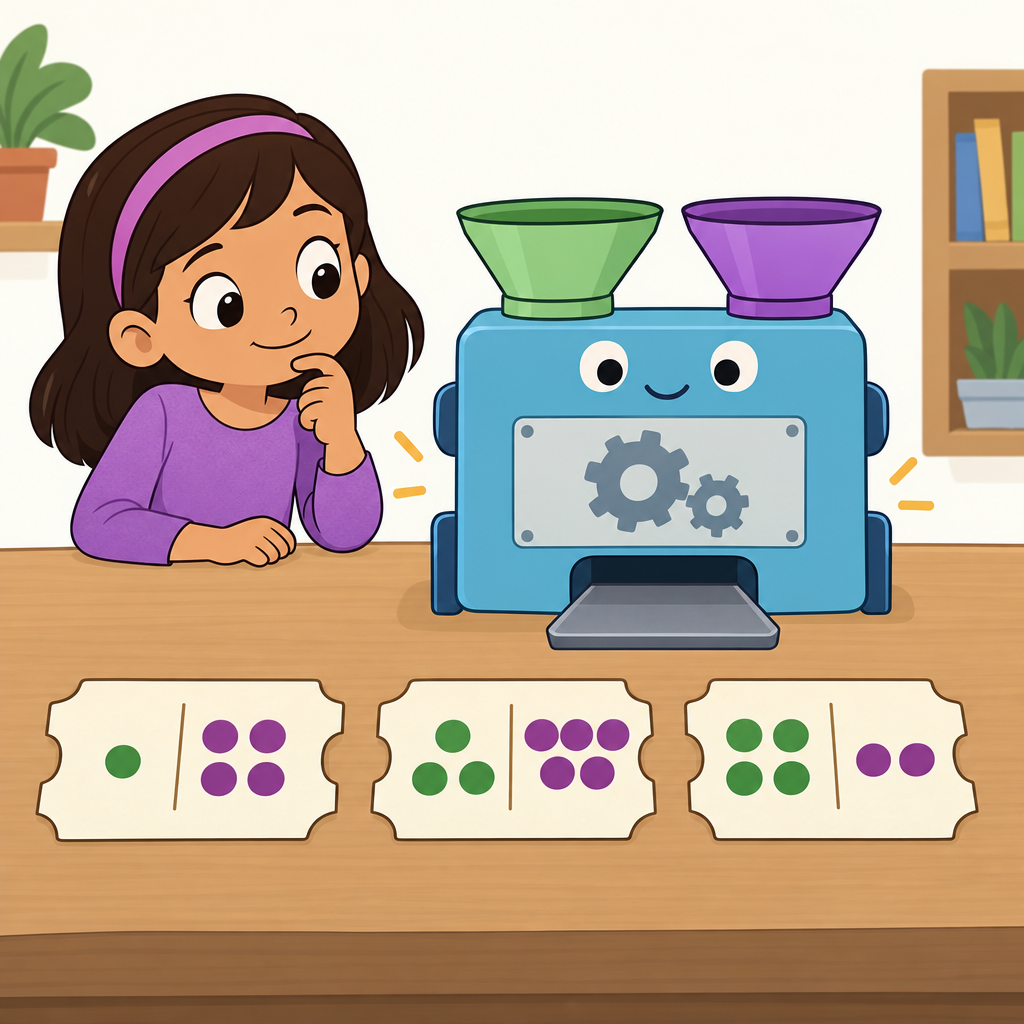
Mia’s number machine makes 1, 4 → 6; 3, 5 → 11; and 4, 2 → 10. Which ticket does not follow its secret rule?
2, 4 → 8
5, 3 → 11
3, 2 → 8
5, 1 → 11
6, 3 → 15
Show a hint
Add the two inputs in each example. How much more do you need to reach the output?
Look for which input gets added a second time, then check every ticket.
Show the answer and solution
Answer: B — 5, 3 → 11
The machine adds the first input twice and the second input once: 1+1+4=6, 3+3+5=11, and 4+4+2=10. So 5, 3 → 11 does not fit: 5+5+3=13. It is tempting because 3, 5 → 11 works, but swapping the inputs changes the result. The other tickets give 8, 11, 15, and 8 as shown.
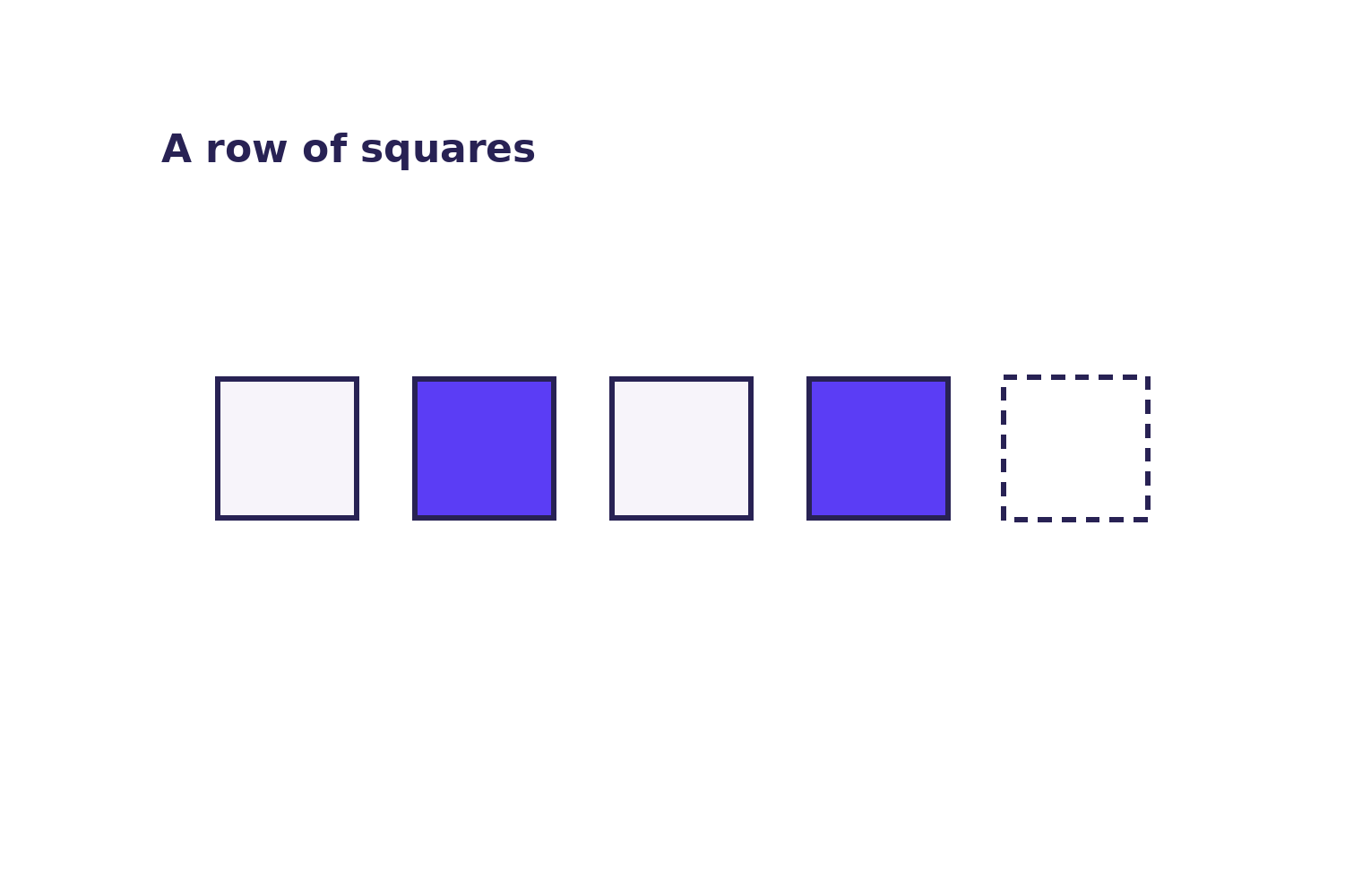
Cover two squares so the two you can still see have the same shade, and neither is beside the empty box. Which squares do you cover?
the second and third squares
the second and fourth squares
the first and third squares
the first and second squares
the third and fourth squares
Show a hint
Check both clues about the squares left showing, not just whether their shades match.
Which square is beside the empty box? It cannot be one of the squares left showing.
Show the answer and solution
Answer: B — the second and fourth squares
Cover the second and fourth squares. The first and third are both light, and neither is beside the empty box. Covering the first and third is tempting because the two squares left showing are both dark, but one of them is beside the empty box.
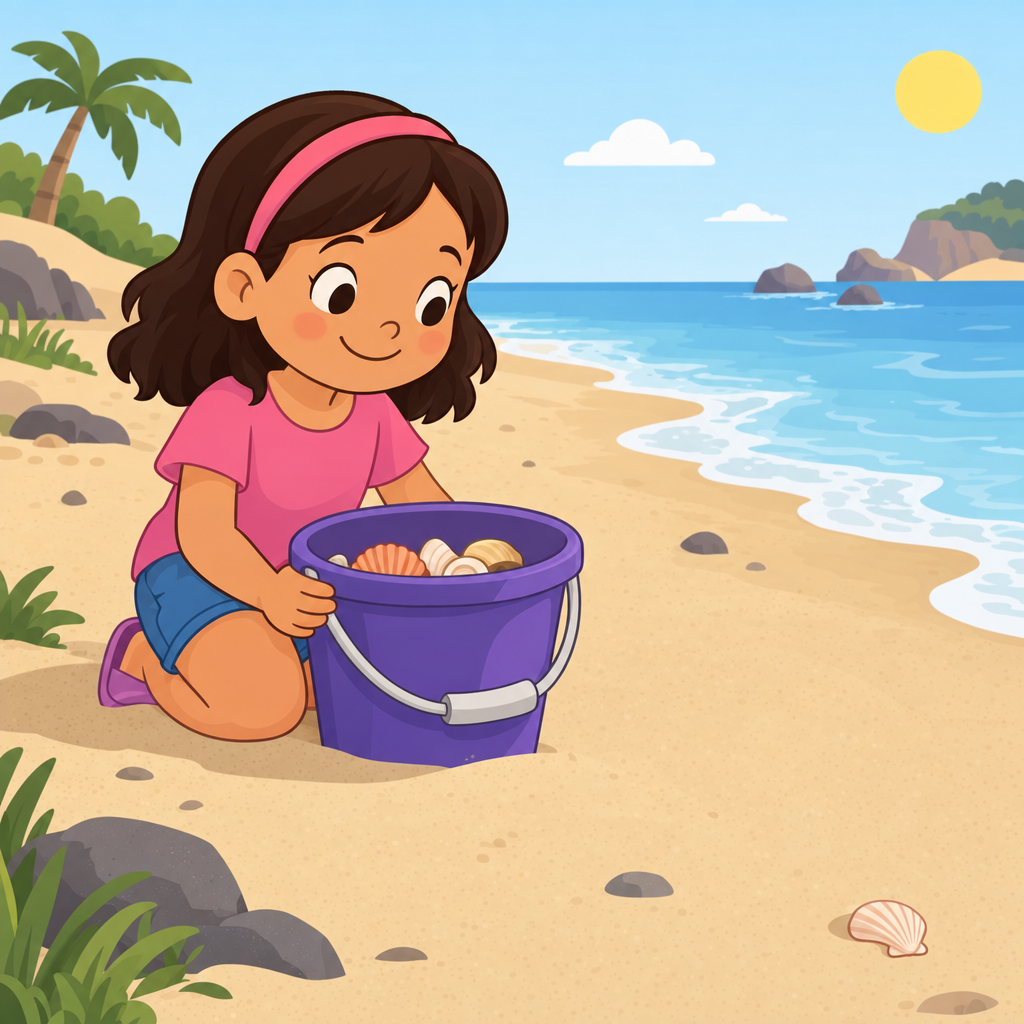
Rosa gave away 3 shells, then found 2 shells. She has 7 shells now. How many did she have at first?
9
6
5
8
12
Show a hint
Start with the shells Rosa has now. Work backward through the story, undoing each change to find how many she had at first.
Undo finding 2 shells first: 7 − 2 = 5. What must Rosa have had before she gave away 3 shells?
Show the answer and solution
Answer: D — 8
Before Rosa found 2 shells, she had 7 − 2 = 5 shells. Before she gave away 3 shells, she had 5 + 3 = 8 shells. So the answer is 8. The wrong answer 6 comes from starting with 7 and running the story forward: 7 − 3 + 2 = 6. But 7 is what Rosa has now, not what she had at first.
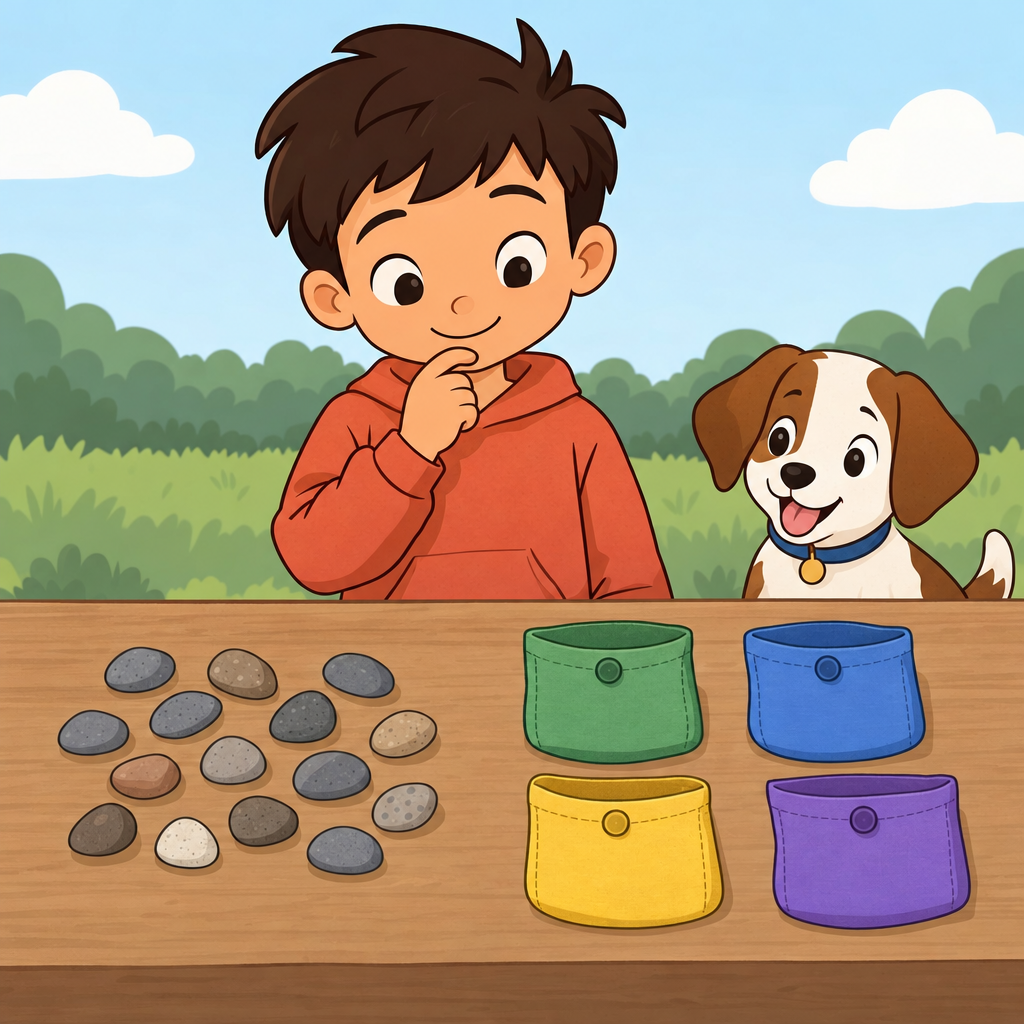
Pip puts 15 pebbles into four pockets. Each pocket has a different number of pebbles, no pocket is empty, and one pocket has exactly 4. What is the most pebbles one pocket can hold?
7
6
9
10
8
Show a hint
To make one pocket hold the most, put as few as possible in the others.
Show the answer and solution
Answer: E — 8
One pocket has 4 pebbles. The two smallest other pockets can have 1 and 2, leaving 15 − 4 − 1 − 2 = 8 for the last pocket. The numbers 1, 2, 4, and 8 are all different, so 8 works. A tempting answer is 9, from 1, 2, 3, and 9—but then no pocket has 4.