Problem 12 · Unfolding by reflection · 4 points
Made by AI and not reviewed by a real person.
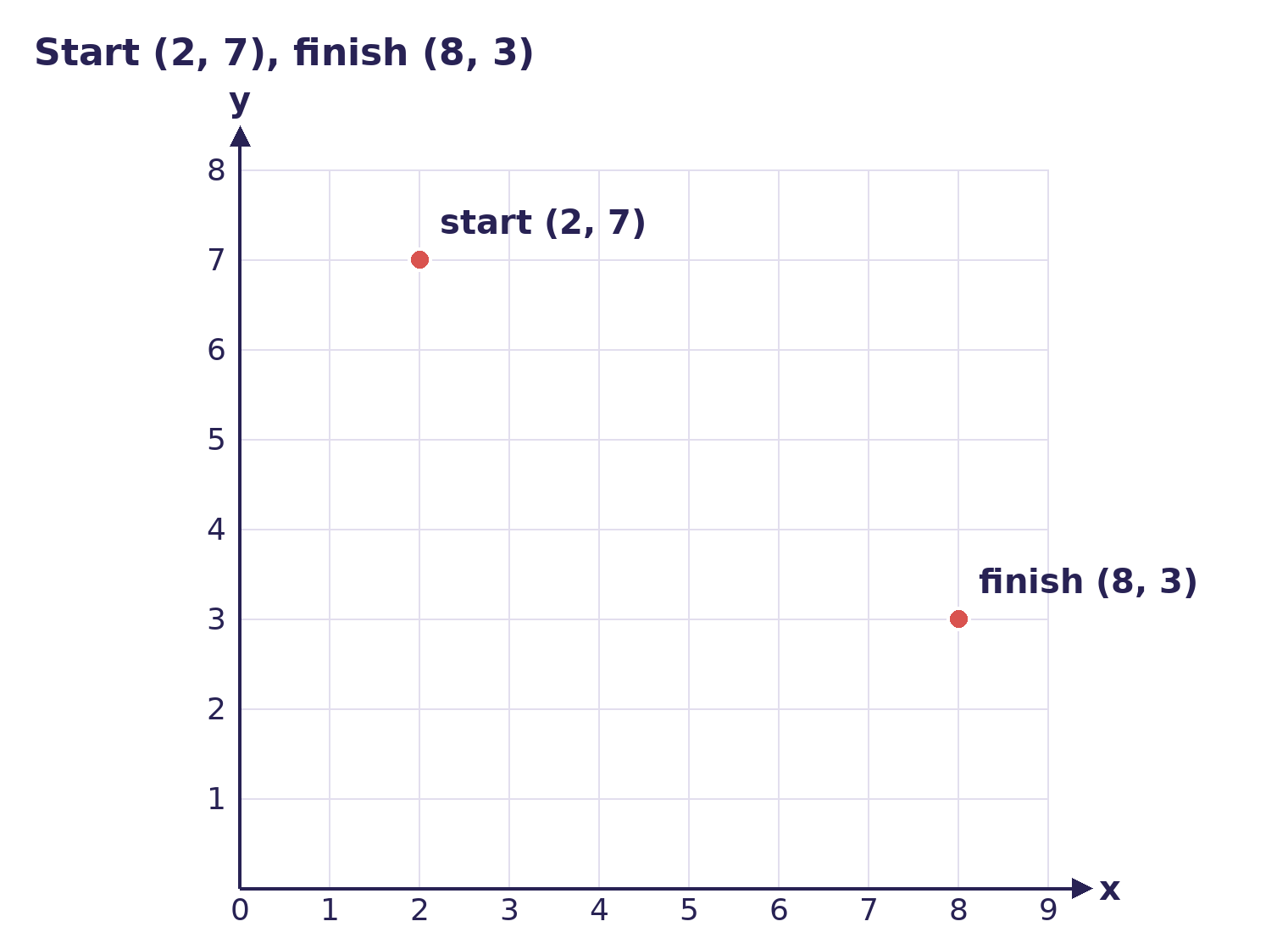
A robot travels within the closed first quadrant from (2,7) to (8,3). It must visit the y-axis and then the x-axis; what is the shortest possible distance it can travel?
- 2√34
- 2√29
- √53 + √73
- 10√2
- 2√13
Show a hint
- Reflecting a path across an axis can turn a bend at that axis into part of a straight-line comparison. How could this help with two required visits?
- Reflect the start across the y-axis and the finish across the x-axis. Check whether the segment joining the reflected points crosses the axes in the required order.
Show the answer and solution
Answer: D — 10√2
Let P be the visit to the y-axis and Q the later visit to the x-axis. Reflecting the start to (−2,7) and the finish to (8,−3) preserves the lengths of the first and last parts of the route. The route is therefore at least as long as the straight-line distance between those reflected points: √(10² + 10²) = 10√2. The joining segment crosses the y-axis at (0,5) and then the x-axis at (5,0), so a route of length 10√2 is possible within the closed first quadrant. The value 2√29 comes from reflecting only the start across the y-axis and measuring to (8,3); that straight segment never reaches the x-axis, so it does not satisfy the second required visit.